

- Stock: In Stock
- Product code: E3
- Weight Brutto: 49.50kg
- EAN: 6970240722366

More from this brand


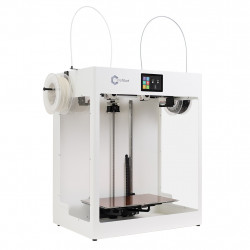
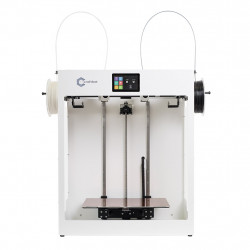
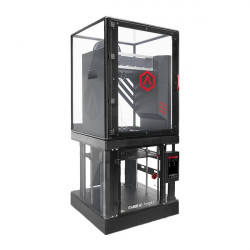
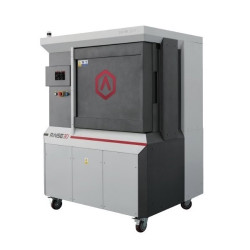
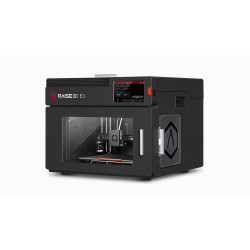
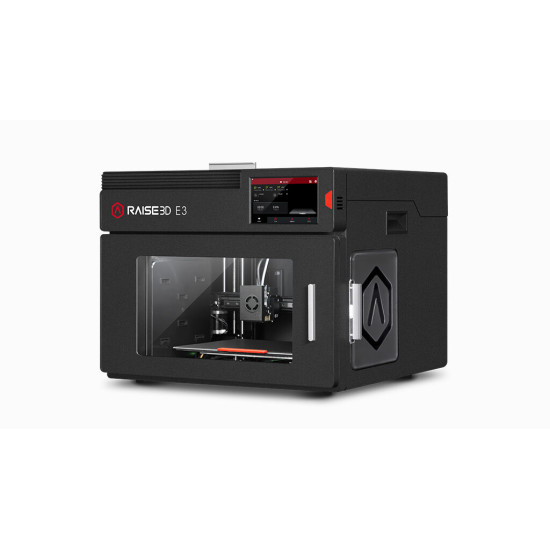
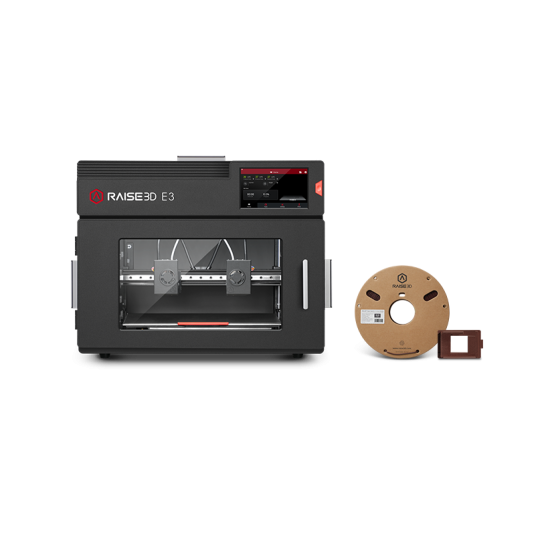
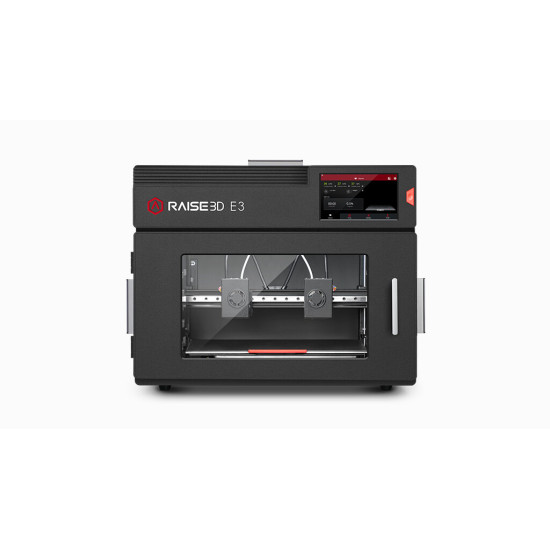
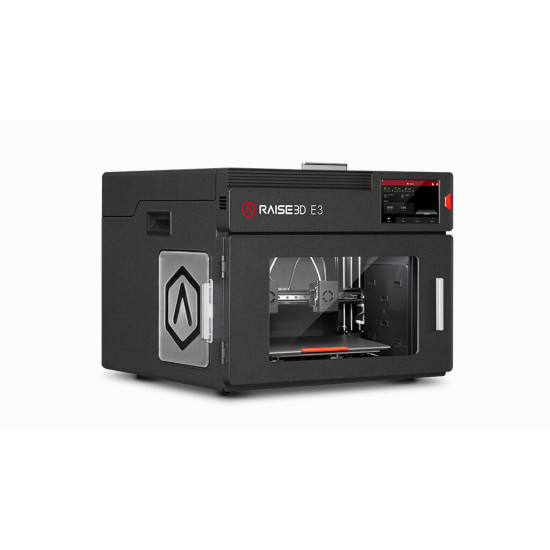
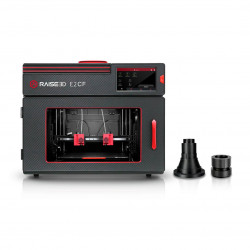
Raise3D E3: A New Level of Industrial 3D Printing for Manufacturing and Prototyping
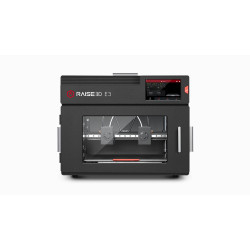
In the world of additive manufacturing, where speed, precision, and versatility define competitive advantages, the Raise3D E3 represents a technological solution that reimagines the possibilities of 3D printing for professional use. This printer is designed for companies that need not just a prototyping tool, but a reliable platform for producing end-use parts with a wide spectrum of materials.
The E3 Philosophy: Elastic, Engineering-grade, Expandable
The E3 name reflects three core principles embedded in the printer's design. Elasticity means the ability to work with flexible materials, including thermoplastic polyurethane of varying hardness levels. Engineering-grade ensures that every part meets production standards for functional prototypes and finished products. Expandability provides a seamless transition from research and development to full-scale serial production.
This triad of characteristics makes the E3 a universal solution for industries where traditional manufacturing methods become too slow or economically impractical. From footwear production to creating complex engineering components, from medical devices to automotive parts, the printer demonstrates flexibility in application without compromising quality.
Revolution in Flexible Material Printing
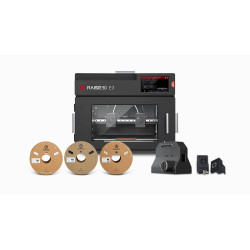
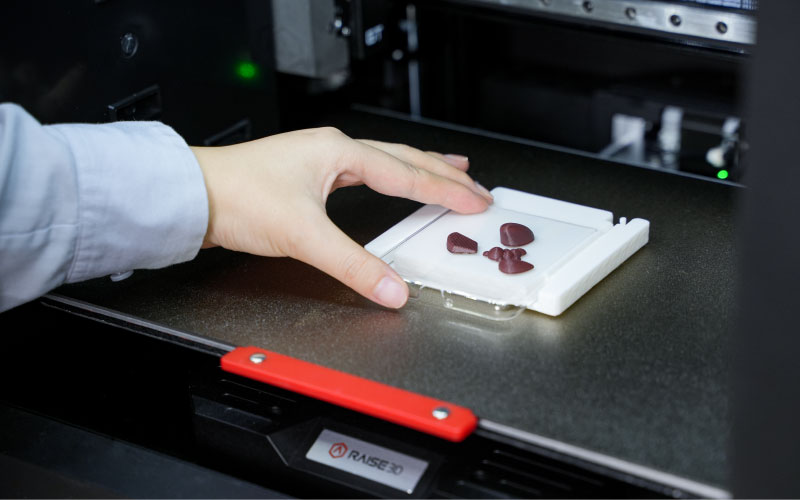
One of the most innovative features of the E3 is its integration with the Raise3D Flexible Filament Auxiliary Feeder. Traditionally, printing with thermoplastic polyurethane and other elastic materials presented significant challenges due to their tendency to deform during feeding. Many printers limited print speeds to a minimum to avoid failed attempts.
The E3 fundamentally changes this situation, achieving flexible filament print speeds of up to two hundred millimeters per second. This isn't merely an improvement over existing benchmarks – it's a paradigm shift in elastic part production. The auxiliary buffering and enhanced feed rate system expands the printer's compatibility with materials of varying hardness, from TPU-95A to TPU-80A and softer variants.
For manufacturers of footwear, medical devices, protective elements, and other products where elasticity is a critical characteristic, the E3 opens possibilities for rapid prototyping and small-batch production directly on production floors. There's no longer a need to wait weeks for samples from external suppliers – an idea can transform into a physical prototype within hours.
Composite Materials for the Most Demanding Applications
Modern engineering challenges often require materials that combine lightness with high strength and rigidity. Composite filaments reinforced with carbon or glass fibers have become standard in aerospace, automotive, and robotics industries. However, working with such materials requires specialized equipment capable of withstanding the abrasiveness of fillers.
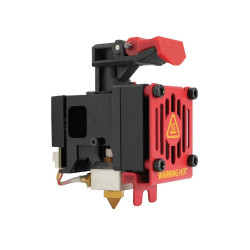
The E3 is equipped with an optional composite filament print head designed specifically for working with reinforced materials. The printer confidently handles PET CF (polyethylene terephthalate reinforced with carbon fiber), PET GF (glass fiber reinforced), PPS CF (polyphenylene sulfide with carbon fiber), and other specialized composites from Raise3D's range.
Reliable composite material printing is ensured by a thoughtfully designed feed path and temperature control system. The printer supports working with materials requiring different temperature regimes thanks to the IDEX system, allowing the creation of complex multi-material products with optimal properties for each component.
Surface Perfection: The Pro Ironing Feature
Surface quality of parts has always been a challenge for FFF technology. The layers characteristic of additive manufacturing often require additional post-processing to achieve the smoothness necessary for visual prototypes or functional parts with specific roughness requirements.
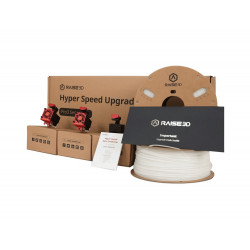
The Pro Ironing feature, combined with the latest Hyper Speed PLA Pro or Industrial PETG ESD filament, elevates surface quality to a level comparable with injection molding. An average surface roughness of less than two micrometers is a metric traditionally associated with production technologies rather than additive manufacturing.
This capability is created through synergy between hardware, materials, and software. Special slicing profiles in ideaMaker optimize print head trajectory, creating virtually mirror-like surfaces on top layers. For design prototypes, medical devices where smoothness is critical for hygiene, or consumer goods where aesthetics determine market success, this feature becomes a significant competitive advantage.
IDEX: Double Production Power
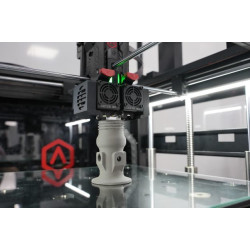
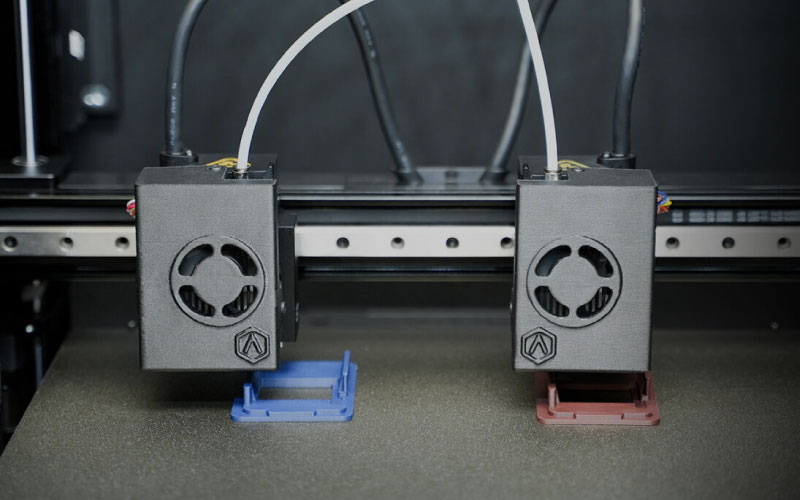
The independent dual extruder system transforms the E3 from a prototyping tool into a serial production platform. IDEX architecture opens several operating modes, each expanding manufacturing capabilities.
In duplication mode, the printer simultaneously creates two identical parts, effectively doubling productivity without additional time investment. For small and medium batches, this means the ability to respond quickly to market demand without investing in additional equipment.
Mirror mode creates mirrored copies of parts, particularly valuable for producing symmetrical components – from left and right housing parts to paired mechanical elements. One print cycle delivers both necessary parts.
Dual-color and multi-material printing expand design possibilities and product functionality. The ability to combine rigid and flexible materials in a single part, use soluble supports for complex geometry, or create products with visual contrast opens new horizons for engineers and designers.
The interlocking function in ideaMaker enables creating composite models from materials with significantly different printing temperatures. This expands the boundaries of what's possible in additive manufacturing, allowing combinations of material properties previously considered incompatible.
Production Continuity: Reliability as Foundation
For professional manufacturing, process reliability is critically important. A failed print lasting dozens of hours means not only loss of time and materials but disruption of production schedules and client commitments.
The E3 is equipped with a comprehensive interruption protection system. Two material storage slots with desiccant ensure filaments remain dry throughout the printing process. Moisture is one of the greatest enemies of quality 3D printing, causing surface defects and dimensional distortions. Continuous dehydration without high-temperature drying prevents these issues, ensuring higher dimensional accuracy of finished parts.
Filament runout sensors don't simply stop printing when material ends – they warn operators in advance, allowing spool replacement planning without equipment downtime. This is especially important for long prints of large parts or serial runs.
Power loss recovery saves the print head's last position before power outage. When power is restored, the printer continues work from the interruption point. In production environments where power supply may be unstable, or for critically important products, this feature saves projects from complete restart.
Automatic Bed Leveling: Precision Without Effort
Print preparation traditionally required careful manual bed leveling – a time-consuming procedure requiring experience. Improper calibration leads to poor first layer adhesion, often meaning failed prints.
The E3's automatic leveling system with nine measurement points scans the bed surface before each print, detecting even minimal deviations. The printer automatically compensates for irregularities, ensuring optimal distance between nozzle and surface at every print point. This not only increases print success rates but allows operators with minimal experience to achieve professional results.
The nine-point leveling system also enables substrate printing – creating parts directly on flat substrates. This feature expands creative possibilities, allowing 3D printing integration into complex manufacturing processes or creating hybrid products combining traditional and additive technologies.
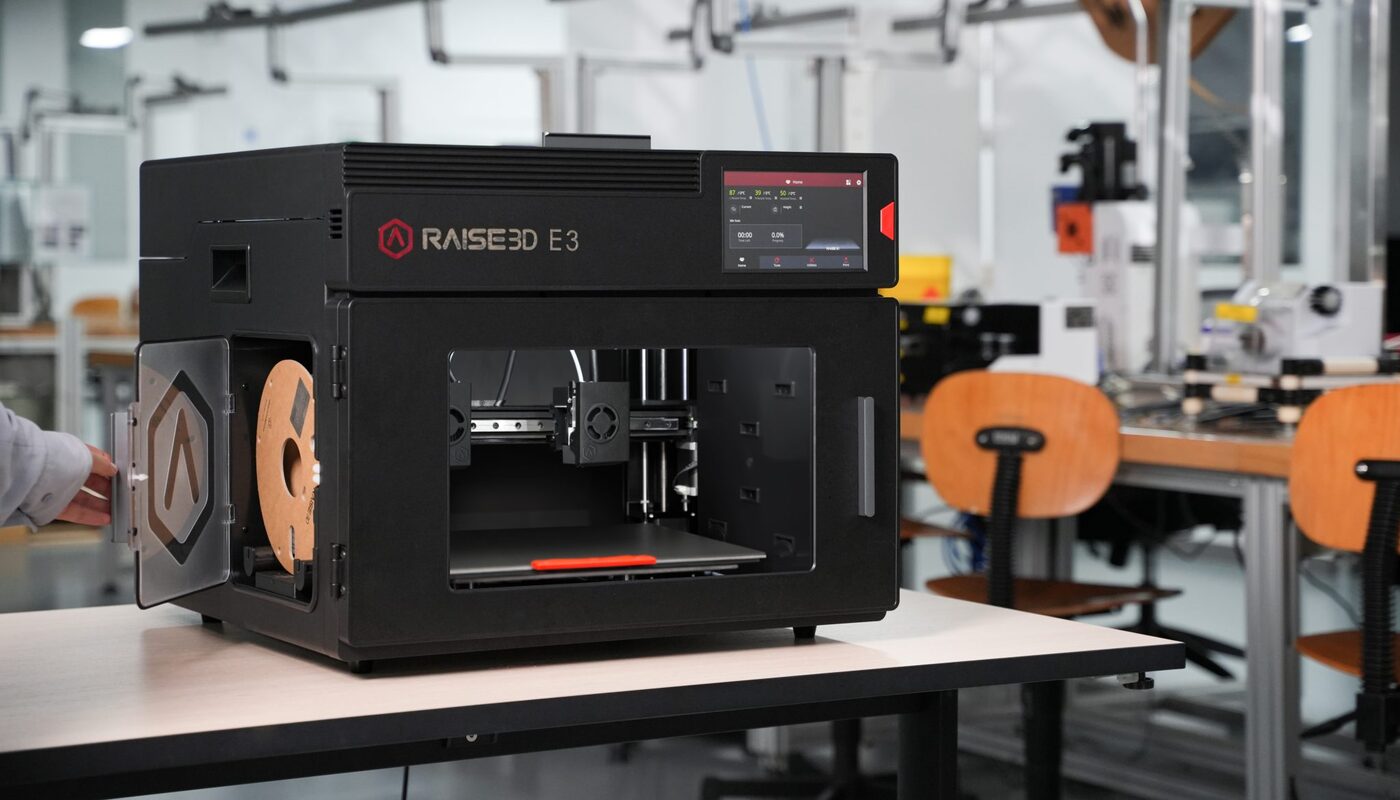
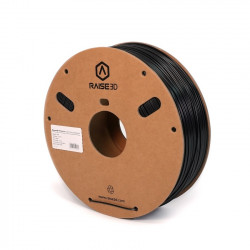
Compatibility with a wide spectrum of materials makes the E3 a truly universal platform. The printer supports the entire Raise3D filament lineup, from basic PLA to high-performance composites, and is integrated with the Open Material Program (OMP), enabling use of third-party filaments.
Different nozzle diameters – from two-tenths to a full millimeter – provide flexibility in balancing detail and print speed. Fine nozzles create highly detailed models with excellent reproduction of small elements, while large nozzles accelerate production of large parts with thick walls.
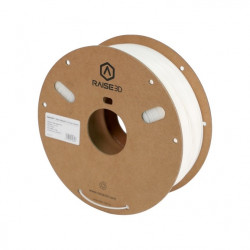
The Hyper Core line includes high-performance polyphthalamide-based composites with carbon and glass fiber reinforcement, plus ABS CF for applications requiring high strength. The Hyper Speed series is optimized for fast printing without quality compromises. The Industrial line covers specialized materials including electrostatic dissipative PETG for electronics and PPS CF for elevated temperature applications.
Intelligent Ecosystem: From Idea to Product
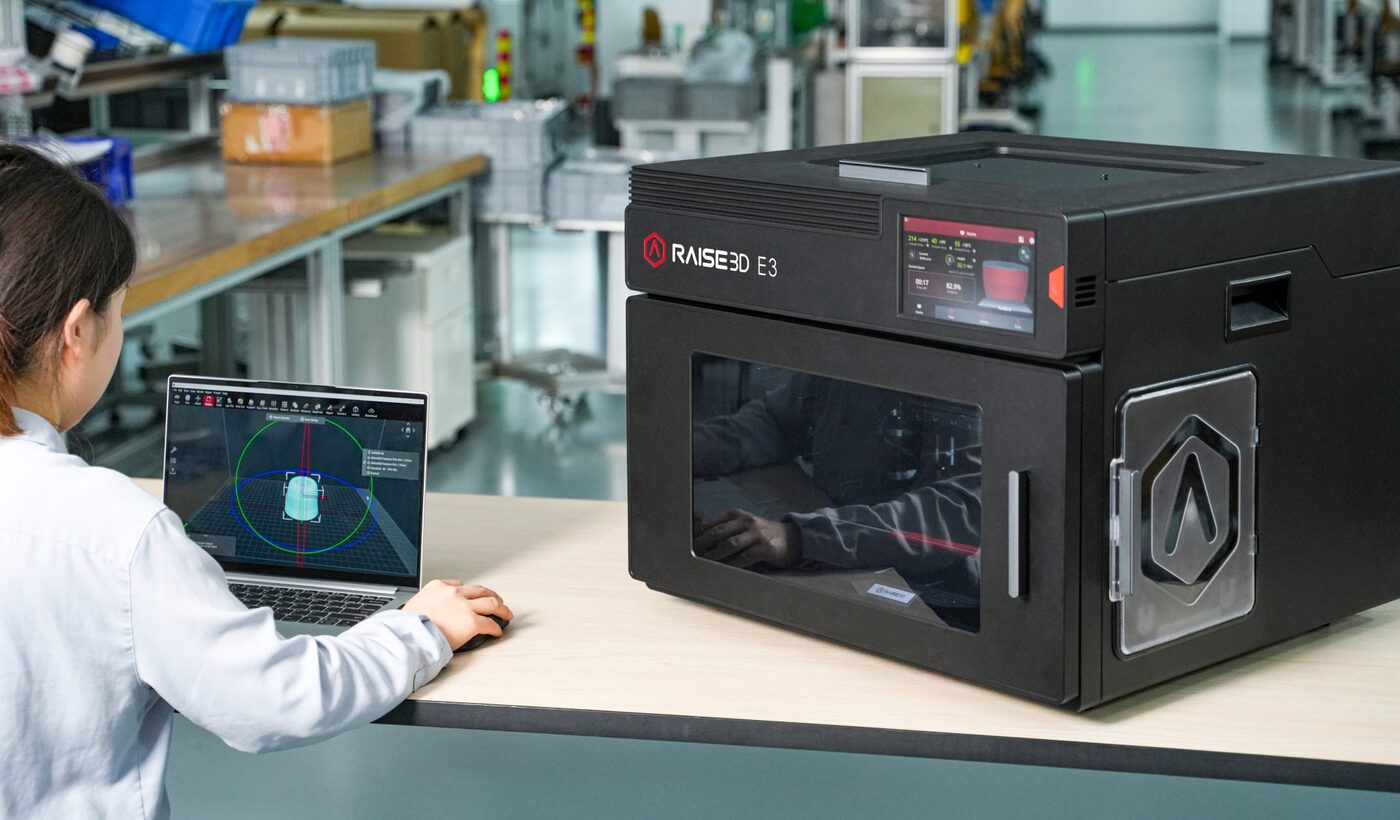
The E3 isn't just a printer but part of a comprehensive manufacturing ecosystem. Integration with ideaMaker, Raise3D's professional slicer, provides optimized profiles for every material and print mode. The software generates supports considering part geometry, calculates optimal trajectories minimizing print time, and anticipates potential issues at the preparation stage.
Connectivity options via Wi-Fi, Ethernet, and USB allow printer integration into production networks. The built-in camera provides remote process monitoring, especially important for long prints or when equipment operates in automatic mode.
The touchscreen provides an intuitive interface for printer control directly at the equipment, while a powerful processor and sufficient memory ensure fast processing of even the most complex models.
Practical Applications in Real Manufacturing
The E3's versatility manifests in the diversity of industries where the printer finds application. In the footwear industry, the ability to rapidly print with elastic materials revolutionizes sole and cushioning element prototyping. Designers can test dozens of variants in the same time previously required to create one sample using traditional methods.
The automotive industry uses composite capabilities to create lightweight, strong components – from brackets to interior elements. Production speed enables rapid response to design changes without costly retooling.
In medicine, the combination of biocompatible materials, print precision, and the ability to create individualized solutions opens new prospects for orthopedic devices, surgical templates, and rehabilitation equipment.
Robotics and electronics benefit from the ability to create complex housings with integrated wiring channels, lightweight structural elements with optimal stiffness-to-weight ratios, and electrostatically safe components for sensitive electronics.
Economic Viability of Additive Manufacturing
Transitioning to additive manufacturing with the E3 brings tangible economic benefits. Reducing time from concept to physical prototype accelerates development cycles, enabling faster product market entry. The ability to produce small batches without expensive tooling lowers barriers to entry for new products and makes serving niche markets economically viable.
Reduced material waste compared to subtractive technologies impacts product cost. On-demand production capability instead of stockpiling large inventories frees capital and reduces product obsolescence risks.
For companies traditionally outsourcing prototyping and small-batch production, integrating the E3 into internal processes means greater control over quality, development confidentiality, and project timelines.
The Raise3D E3 represents mature additive manufacturing technology ready for integration into professional production processes. The combination of speed, precision, material versatility, and reliability makes this printer a tool for companies viewing 3D printing not as auxiliary technology but as a full-fledged manufacturing method.




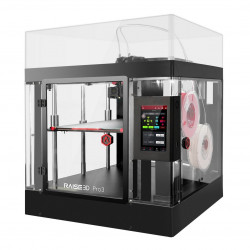
-250x250.jpg "3D printer Raise3D Pro2")

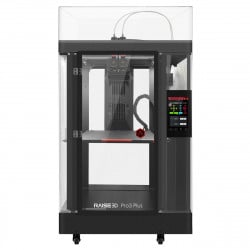
-250x250.jpg "3D printer Raise3D Pro2 Plus")