

- Stock: In Stock
- Product code: 316L
- Weight Brutto: 6.00kg

More from this brand

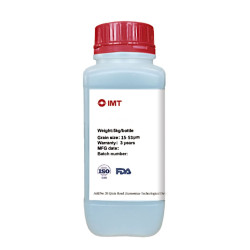
IMT 316L Metal Powder: Chromium-Nickel Alloy for 3D Printing
IMT 316L spherical iron-based metal powder, containing chromium, nickel, and molybdenum, is a high-quality austenitic corrosion-resistant stainless steel base. It is designed for 3D printing durable products with enhanced anti-corrosion properties.
Technological Features and Production Methods
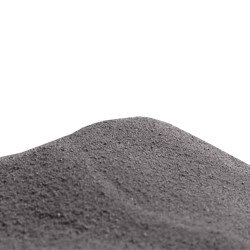
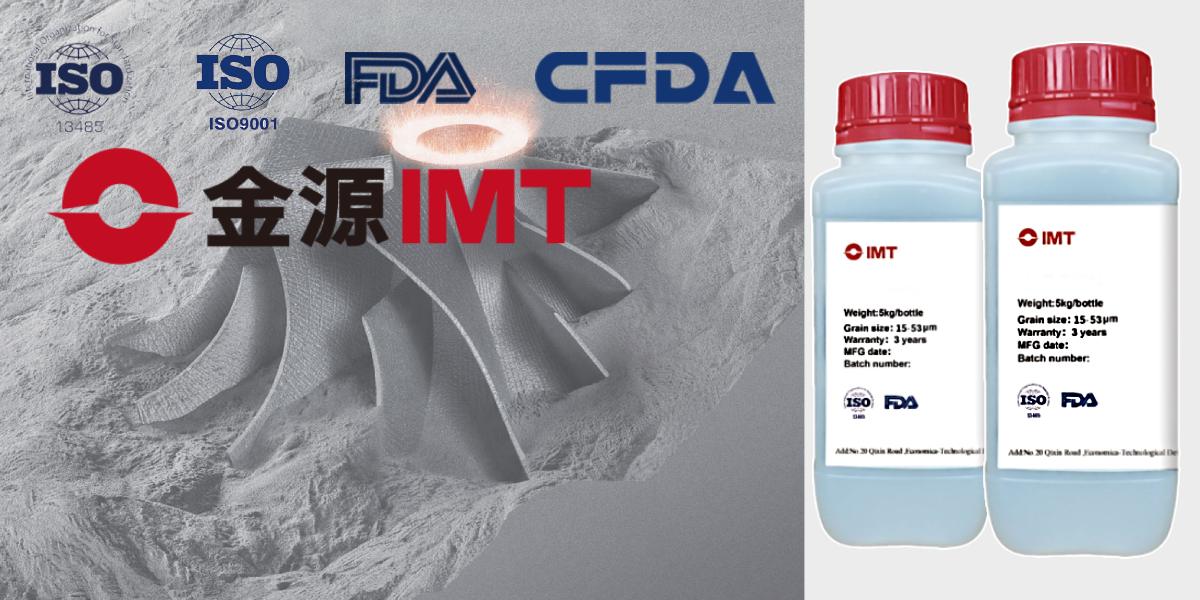
The basis of the exceptional performance characteristics of IMT 316L powder is its manufacturing method – gas atomization of the melt in a strictly controlled inert atmosphere. This process allows for obtaining particles of an almost perfect spherical shape. Spherical metal powder for 3D printing is characterized by a minimal amount of satellite inclusions (small adhered particles), which is critical for ensuring high material flowability.
Chemical Composition and Anti-Corrosion Properties of 316L Steel
The choice of 316L alloy for metal 3D printers is due to its outstanding chemical resistance. This is an austenitic stainless steel that finds application in the most aggressive environments. Stainless steel for additive manufacturing of grade 316L differs from standard chromium-nickel alloys by the presence of molybdenum and ultra-low carbon content.
The Role of Alloying Elements in the Powder Composition
The composition of IMT 316L powder includes the following key components:
- Iron (alloy base);
- Chromium (16–18%) – provides primary protection against oxidation;
- Nickel (10–14%) – stabilizes the austenitic structure, giving the material plasticity;
- Molybdenum (2–3%) – significantly increases resistance to pitting and crevice corrosion.
The most important characteristic is the carbon content, which does not exceed 0.03 percent. The letter "L" in the name (Low carbon) indicates exactly this feature. Low carbon content prevents the precipitation of chromium carbides along grain boundaries during the intense thermal cycles that accompany metal 3D printing. This minimizes the risk of intergranular corrosion and guarantees the durability of products even under conditions of constant contact with seawater or acids.
Particle Size Distribution and Printing Accuracy
A powder fraction of 15–53 μm is considered ideal for selective laser melting (SLM) and laser powder bed fusion (LPBF) systems. The optimal fraction of metal powder allows for achieving an ideal balance between surface quality and the speed of object construction. A narrow particle size distribution promotes stable absorption of laser energy, which leads to the formation of a dense metal structure with almost zero porosity.
Using fine powder with clearly defined particle size boundaries allows for:
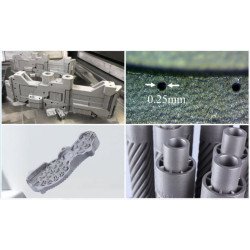
- Reproducing complex geometric shapes with thin walls.
- Achieving high detailing of small structural elements.
- Ensuring surface finish that requires minimal post-processing.
- Maintaining high material density at the level of 7.9–8.0 grams per cubic centimeter.
Application Areas and Industrial Potential
Due to its unique properties, products made from IMT 316L powder find application in the most critical industries. Industrial metal 3D printing using this material is in demand where parts require a combination of strength, hygiene, and resistance to chemical influence.
Main Spheres of Operation
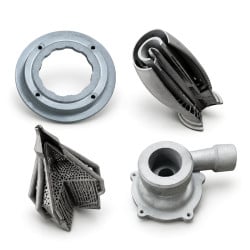
- Chemical and oil & gas industry: manufacturing of pumping equipment, valves, pipeline fittings elements, and sensors operating in aggressive environments.
- Medicine and pharmaceuticals: production of surgical instruments, implants, and equipment components requiring regular sterilization and biological inertness.
- Food industry: creation of machine parts in contact with food products, where surface smoothness and lack of corrosion are important.
- Mechanical engineering: prototyping and mass production of functional brackets, nozzles, and heat exchangers of complex shapes.
Parts printed from IMT 316L demonstrate excellent impact toughness and high tensile strength. It is important to note that the material responds perfectly to standard post-processing methods: it can be milled, ground, polished to a mirror finish, and subjected to thermal tempering to relieve internal stresses after printing.
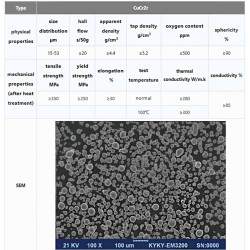
Technical Parameters Table
| Parameter | Value |
|---|---|
| Material | Stainless steel 316L (AISI 316L / EN 1.4404) |
| Steel Type | Austenitic corrosion-resistant |
| Particle Shape | Spherical |
| Production Method | Gas atomization in an inert atmosphere |
| Particle Size | 15–53 μm |
| Particle Sphericity | >95 % |
| Bulk Density | ≈4.0–4.3 g/cm³ |
| Tap Density | ≈4.8–5.0 g/cm³ |
| Material Density | 7.9–8.0 g/cm³ |
| Flowability (Hall Flow) | ≤25 s / 50 g |
| Oxygen Content | ≤0.08 % |
| Main Printing Technologies | SLM, LPBF, EBM, DED |
| Relative Density of Products | up to 99–99.5 % |
| Tensile Strength | 520–650 MPa |
| Yield Strength | 200–500 MPa |
| Elongation | 35–50 % |
| Hardness | 80–90 HRB |
| Working Temperature of Products | up to ~425 °C |
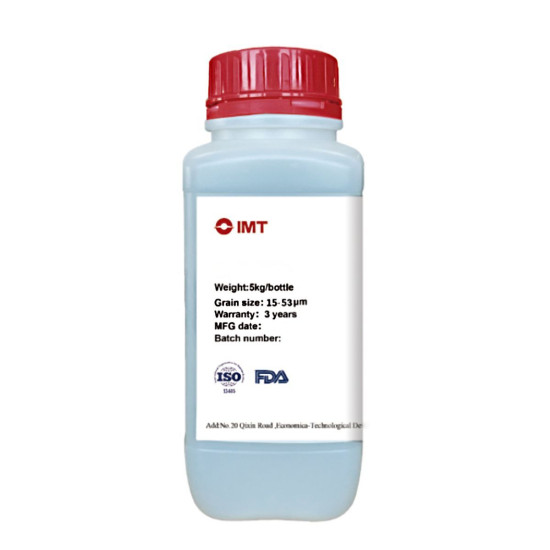
| Package Weight | 5 kg |
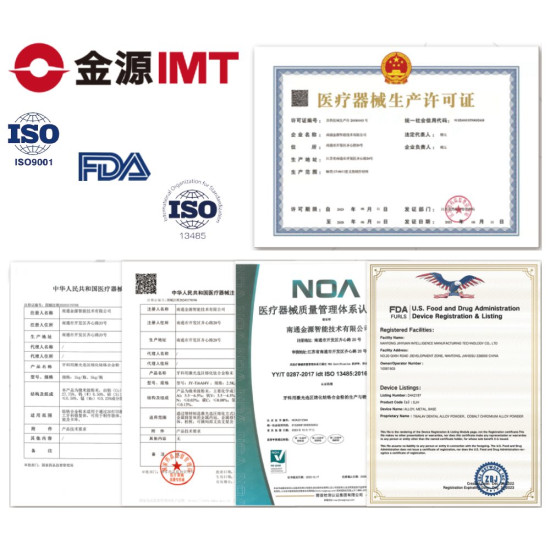
By choosing IMT products, you get an expert solution for powder metal 3D printing that meets strict international quality standards. This material will allow you to transition from simple prototyping to full-scale serial production of functional metal components of any complexity. Call us, we will help you select the necessary printing consumables at optimal prices.