

- Stock: In Stock
- Product code: 827588000004130941
- Weight Brutto: 60.00kg
- SKU: AGI-A3 Ultra-EDU

AgiBot A3 Ultra-EDU for Robotics and Programming Education
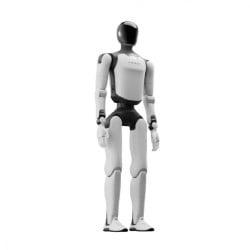
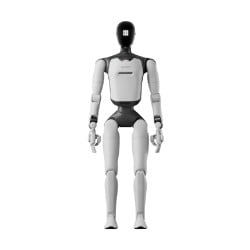
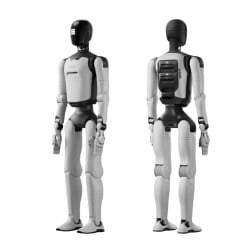
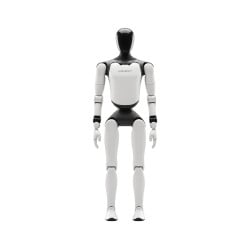
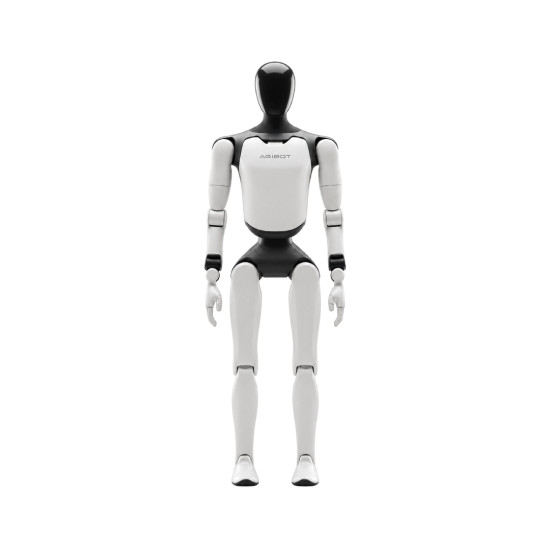
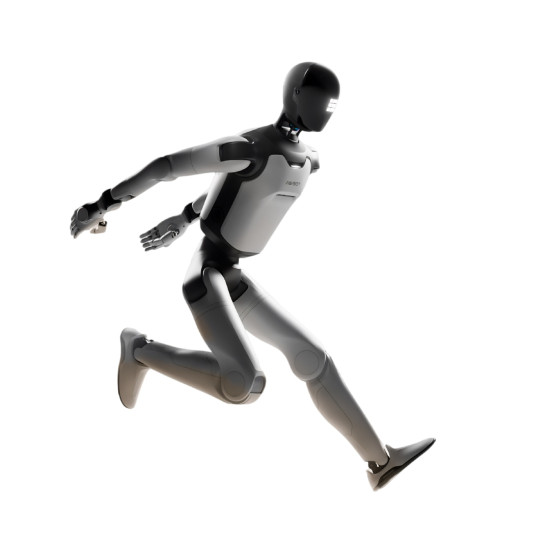
The AgiBot A3 Ultra-EDU humanoid robot is an educational version of the full-size A3 Ultra platform, designed for programming, research and the study of how a machine interacts with its surroundings. The base model is 174 cm tall, weighs 60 kg and has 51 active degrees of freedom. Data processing is handled by NVIDIA Thor and two RK3588 processors, while spatial information is provided by a 3D LiDAR and a camera system. The 1152 Wh battery is rated for up to 8 hours of autonomous operation at a 1:1 walking-to-standing ratio. Through open software interfaces, developers gain access to motion functions and sensor streams for building their own applications.
Advantages of the AgiBot A3 Ultra-EDU
- Access to functions through software interfaces. Support for HTTP JSON RPC and ROS 2 Topic enables command calls and real-time data transfer for custom control algorithms.
- Multi-sensor spatial perception. Data from the 3D LiDAR, RGB-D cameras, binocular RGB camera and surround-view cameras is used to build a map of the environment and detect obstacles.
- Powerful onboard computing system. The NVIDIA Thor module and two RK3588 processors provide the computing power for motion coordination, interaction and artificial intelligence algorithms.
- Flexible power management. The 1152 Wh battery supports direct and autonomous charging in 2 hours, as well as quick battery swapping for long operation.
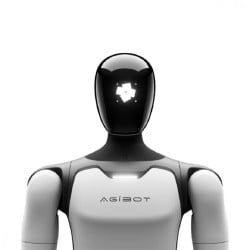
- Built-in user interaction features. A voice module, a display and shoulder touch sensors extend communication capabilities in teaching and demonstration scenarios.
- Motion design in LinkCraft. The tool lets you create custom motion sequences without complex low-level programming for lessons and presentations.
- Group work coordination. Support for LinkBots and UWB positioning enables synchronised actions of several platforms with a defined order of command execution.
Software Development and Available Functions
An HTTP JSON RPC interface is provided for accessing platform functions through network requests, while real-time messaging is handled via ROS 2 Topic. Based on these protocols, developers create their own robot control applications.
The software environment covers motion commands, audio functions, sensor readings and system diagnostics. Indoor map building and autonomous navigation are also supported. The exact list of available APIs and modules depends on the installed software version.
Complex manipulation and commercial service operations shown in demonstrations of the base A3 platform are not part of the standard set of ready-made scenarios of the Ultra-EDU version. Implementing them requires independent code development, environment preparation and testing on site.
Cameras and Spatial Positioning Systems
Information about the surrounding space is gathered by the 3D LiDAR, RGB-D depth modules, surround-view cameras and a binocular RGB camera for interaction. The sensor suite supports autonomous navigation, while coordinates are determined by GPS, RTK and UWB systems.
The two RGB-D modules perform different tasks. The optical sensor located in the chest area transmits an image of the work area together with a depth map, while the lower module monitors the surface in front of the platform while walking.
A dedicated data collection mode makes it possible to record images, depth maps and LiDAR point clouds for building datasets and validating algorithms. Two GMSL ports are provided for connecting and testing compatible additional video sensors.
Mechanical Design and Motion Capabilities
The number of degrees of freedom (DOF) determines the kinematic mobility of a mechanism. The base A3 Ultra platform has 51 active degrees of freedom including the hands: 7 for each arm, 6 for each leg, 3 for the waist joint and 2 for the neck.
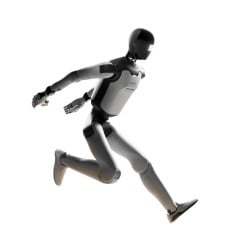
The permissible load per arm is 5 kg. The maximum walking speed reaches 1.8 m/s, and the running speed is up to 5 m/s.
OmniHand hands are supplied in various configurations. Their number of degrees of freedom and the total DOF figure for a specific EDU delivery must be checked against the order specification.
Interaction Setup and Preparation for Demonstrations
The LinkSoul platform is designed for setting up the robot's character image, voice parameters and communication scenarios. During lessons and public shows, contact with the audience is maintained through the voice interface, the integrated display and the touch sensors on the shoulders.
Dynamic movements and gestures for performances are prepared in the LinkCraft environment. For group tasks, the LinkBots tool combined with the UWB module synchronises the trajectories and order of actions of several robots at one venue.
The design supports automatic entry into and exit from the transport case, so a single operator can deploy the platform on location.
Battery System and Site Requirements
The 1152 Wh battery provides up to 8 hours of autonomous operation at a 1:1 walking-to-standing ratio. Actual operating time depends on the intensity of movement, travel speed and load on the actuators.
Recharging from a 110–220 V mains supply takes no more than 2 hours. The design supports wired charging, autonomous return to the charging station and quick replacement of the battery pack.
The working surface must be level, dry and stable, and there must be enough free space around for safe manoeuvring. Operating the robot in high humidity, extreme temperatures, on steep slopes and near drops in height is prohibited. Only trained operators are permitted to control it.
Applications of the AgiBot A3 Ultra-EDU
The educational configuration is aimed primarily at teaching, scientific research and the creation of custom software solutions. Commercial and demonstration tasks require pre-developed software, built route maps and testing under the conditions of a specific site.
- Teaching at universities and technical centres. Hands-on learning of humanoid platform kinematics, motion programming and sensor data processing via ROS 2.
- Laboratory research. Development and validation of algorithms for autonomous navigation, balancing and human-machine interaction.
- Data collection for artificial intelligence. Synchronised recording of video streams, depth maps and LiDAR point clouds for training neural networks.
- Testing machine vision systems. Trials of compatible additional cameras connected via GMSL ports on a mobile platform.
- Tours in museums and exhibition halls. Autonomous movement along a set route, accompanying the exhibition and answering visitors' questions from a prepared knowledge base.
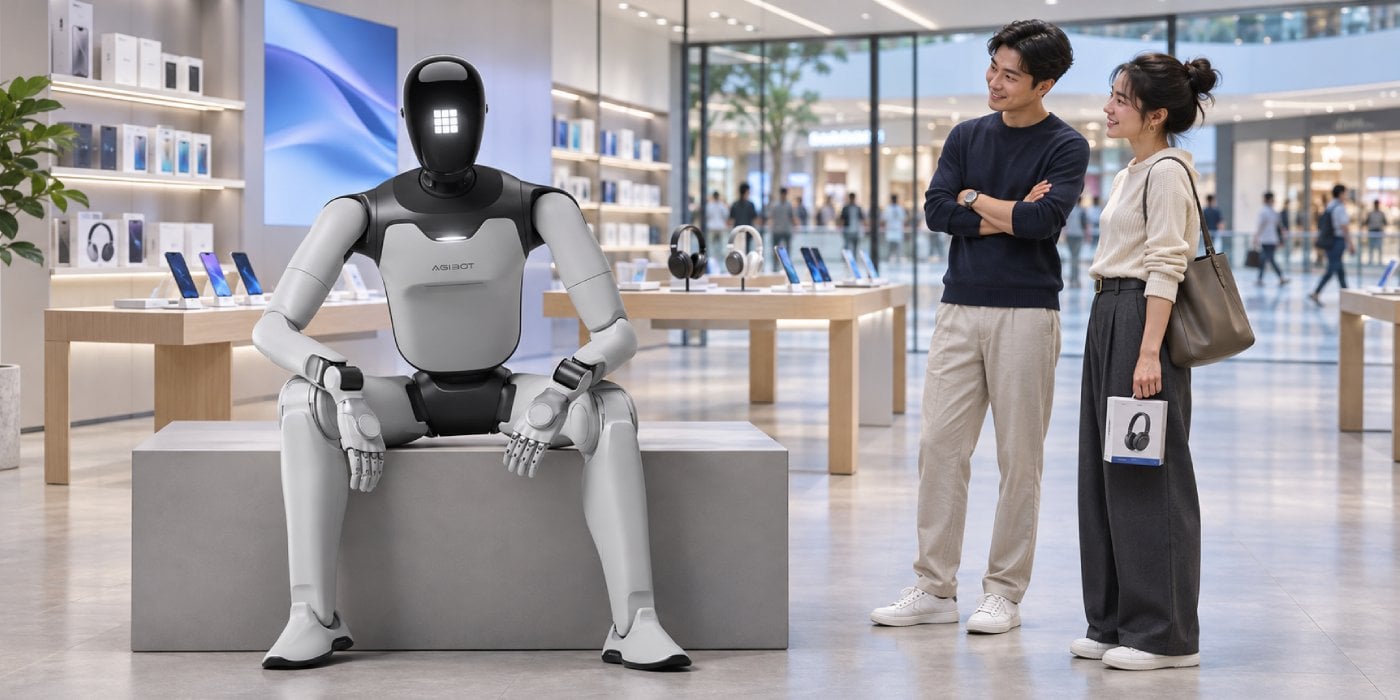
- Consulting in retail and shopping centres. Product presentations, interactive demonstrations and escorting customers to the required area of the sales floor.
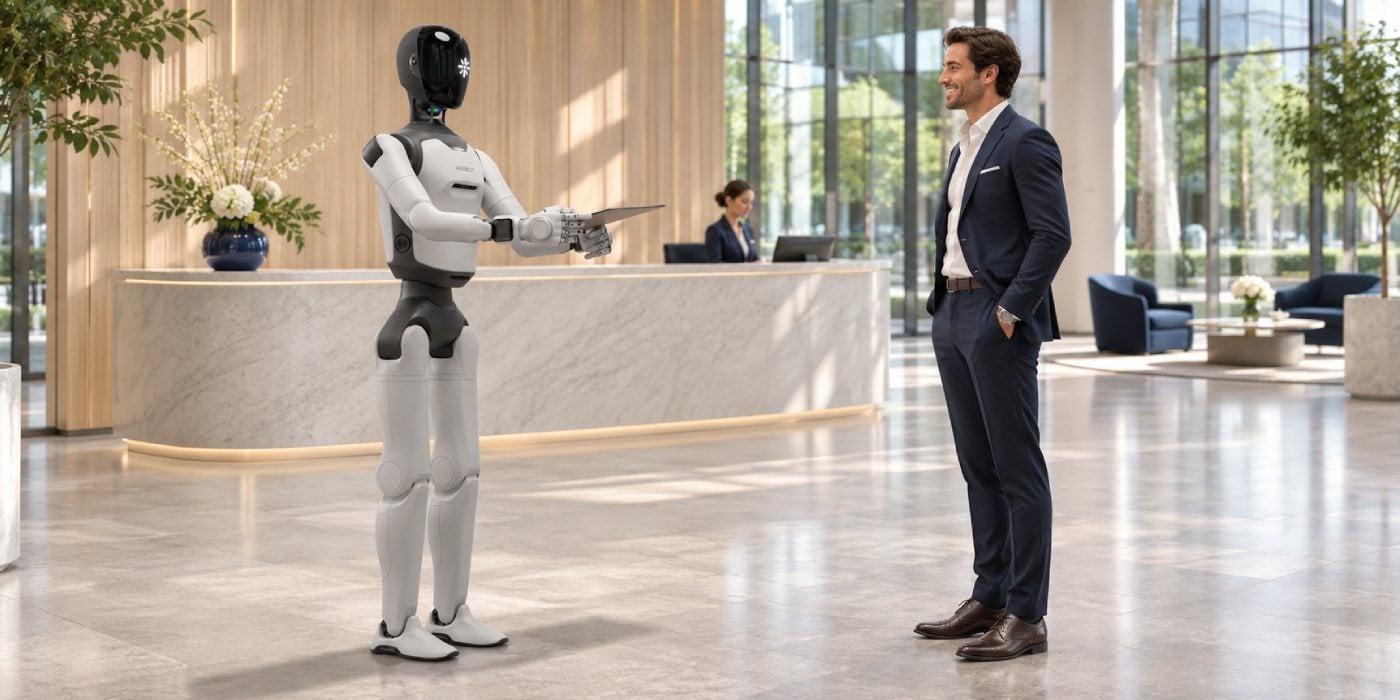
- Serving receptions and customer areas. Greeting visitors, providing reference information and guiding guests in business centres.
- Programmes for restaurants and events. Performing programmed greetings and interactive scenarios for the guests of the venue.
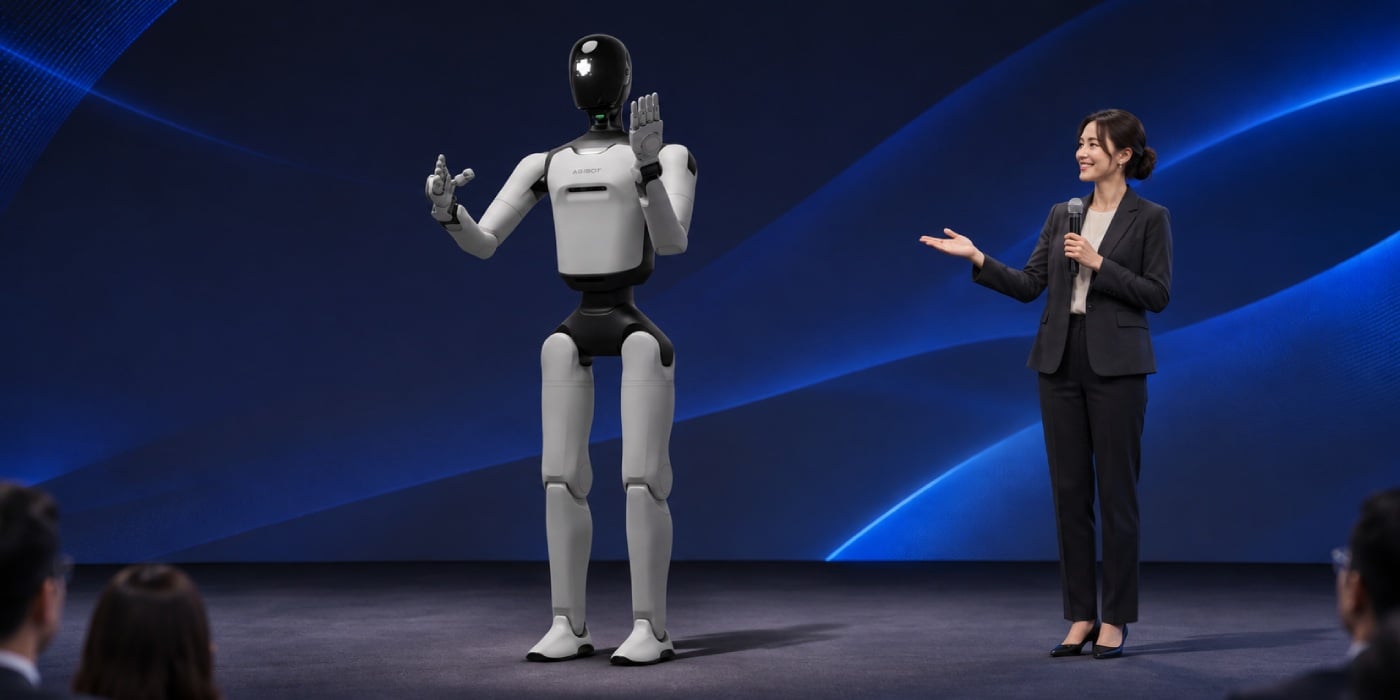
- Stage and group performances. Playing back synchronised choreographic sequences by several robots using UWB positioning.
- Brand presentations and exhibition stands. Engaging the audience with a customised LinkSoul character and set motion scenarios.
- Patrolling and inspecting premises. Scheduled rounds of facilities along a configured route, provided the floor covering requirements are met.
AgiBot A3 Ultra-EDU Technical Specifications
Design and Locomotion
| Parameter | Value |
| Active degrees of freedom of the base platform | 51 according to the A3 Ultra specification |
| Degrees of freedom of each arm | 7 |
| Degrees of freedom of each leg | 6 |
| Degrees of freedom of the waist joint | 3 |
| Degrees of freedom of the neck | 2 |
| Load per arm | 5 kg |
| Maximum walking speed | 1.8 m/s |
| Maximum running speed | 5 m/s |
| Net dimensions | 174 × 52 × 30 cm |
| Net weight | 60 kg |
Computing System and Sensors
| Parameter | Value |
| Computing components | NVIDIA Thor, RK3588 × 2 |
| Computing performance | 700 TOPS |
| Sensors | 3D LiDAR, RGB-D cameras, binocular RGB camera, surround-view cameras |
| Positioning systems | GPS, RTK, UWB |
| Wireless connectivity | Wi-Fi, 4G/5G, Bluetooth |
| Software interfaces | HTTP JSON RPC, ROS 2 Topic |
| Connection of compatible additional cameras | 2 GMSL ports |
Power and Autonomy
| Parameter | Value |
| Battery system capacity | 1152 Wh |
| Autonomous operating time | Up to 8 hours at a 1:1 walking-to-standing ratio |
| Charge maintenance options | Direct charging, autonomous charging, battery swapping |
| Charging time | No more than 2 hours |
| Charging input voltage | 110–220 V |
Order the AgiBot A3 Ultra-EDU from Center3DPrint
Order the AgiBot A3 Ultra-EDU humanoid robot from Center3DPrint for teaching laboratories, scientific research and the development of your own software. Our specialists will help you choose the hand configuration and agree the available development interfaces and the scope of delivery to suit your technical requirements.