

- Stock: In Stock
- Product code: 827588000004130899
- Weight Brutto: 105.00kg

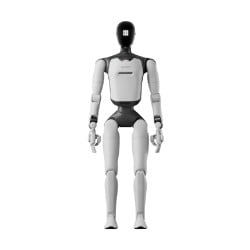
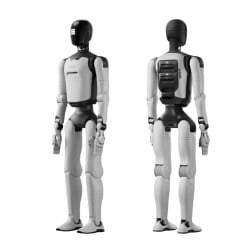
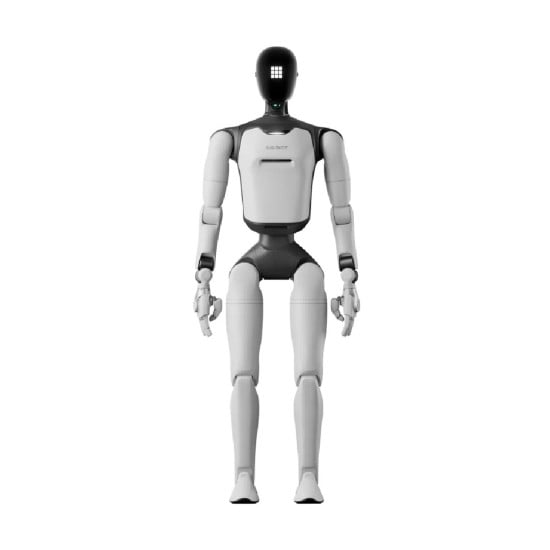
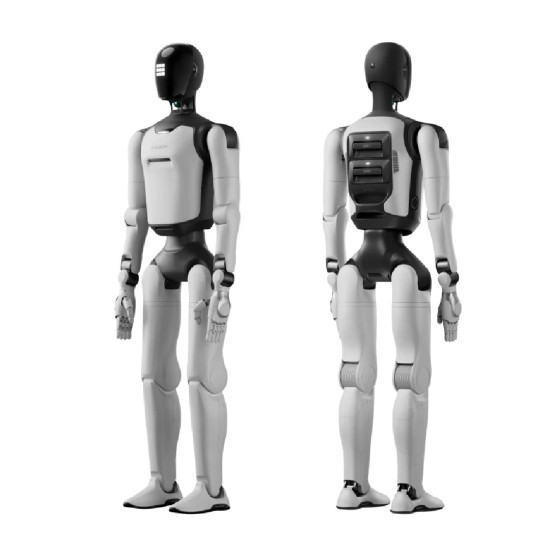
AgiBot A3 Ultra-Developer: Robot for Programming and Research
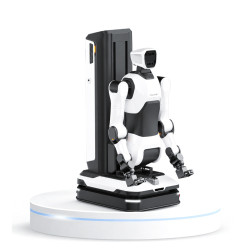
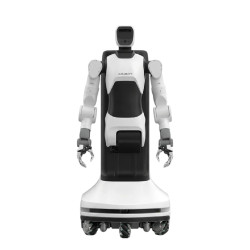
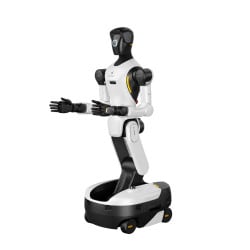
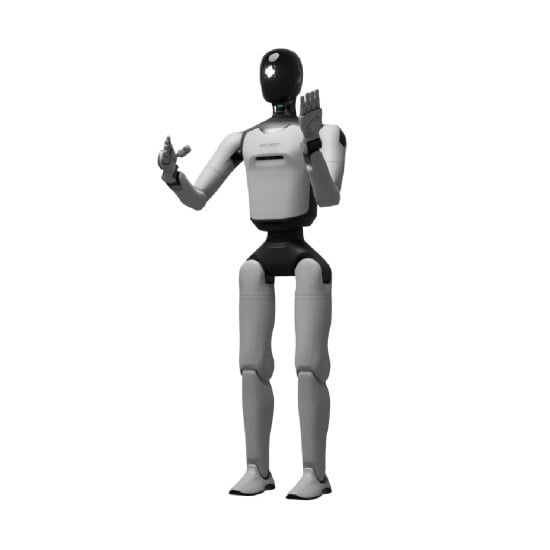
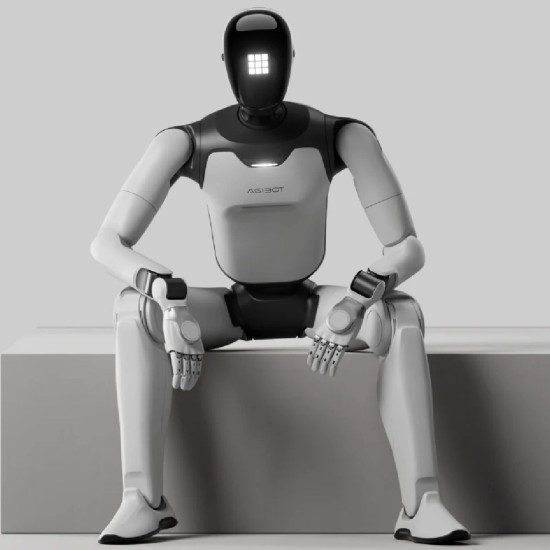
AgiBot A3 Ultra-Developer is a full-sized humanoid robot designed for performing physical operations, interacting with people, and building custom software solutions. A 3D LiDAR alongside RGB and RGB-D cameras are used for object recognition and spatial orientation. A computing platform powered by NVIDIA Thor handles sensor data processing and motion control. A defining feature of the Developer edition is access to the SDK, ROS 2 interfaces, and technical documentation for secondary development. This allows you to create proprietary algorithms, programme actions, modify the robot's behaviour, and integrate it with third-party software solutions.
Key Advantages of the AgiBot A3 Ultra-Developer
- Platform for secondary development. The SDK, ROS 2 interfaces, and documentation provide tools for developing custom control algorithms, programming movements, and integrating the robot with third-party software.
- Acquiring new actions. Few-Shot Self-Learning technology enables the robot to master new skills from a small number of examples. This mechanism can be used to configure object manipulation tasks and motion sequences.
- Up to 8 hours of autonomous operation. A 1,152 Wh battery delivers up to 8 hours of autonomy assuming an equal ratio of walking to standing time. The robot supports automatic docking with a charging station and rapid battery swapping taking approximately 10 seconds.
- 360-degree vision and spatial recognition. A binocular RGB camera, three wide-angle fisheye cameras, 3D LiDAR, and two RGB-D cameras capture environmental data, helping detect objects, obstacles, and analyse the ground surface underfoot.
- OmniHand robotic hands. Integrated tactile sensors ensure contact control with objects during grasping and handling.
- Up to 700 TOPS computing performance. The computing architecture combines dual RK3588 boards with an NVIDIA Thor module, engineered for sensor data processing, object recognition, route planning, and executing control algorithms.
- Indoor and outdoor positioning. UWB is utilised for indoor localisation, whilst GPS RTK handles open outdoor areas, achieving a positioning accuracy of less than ±1 cm.
Mechanical System and Mobility
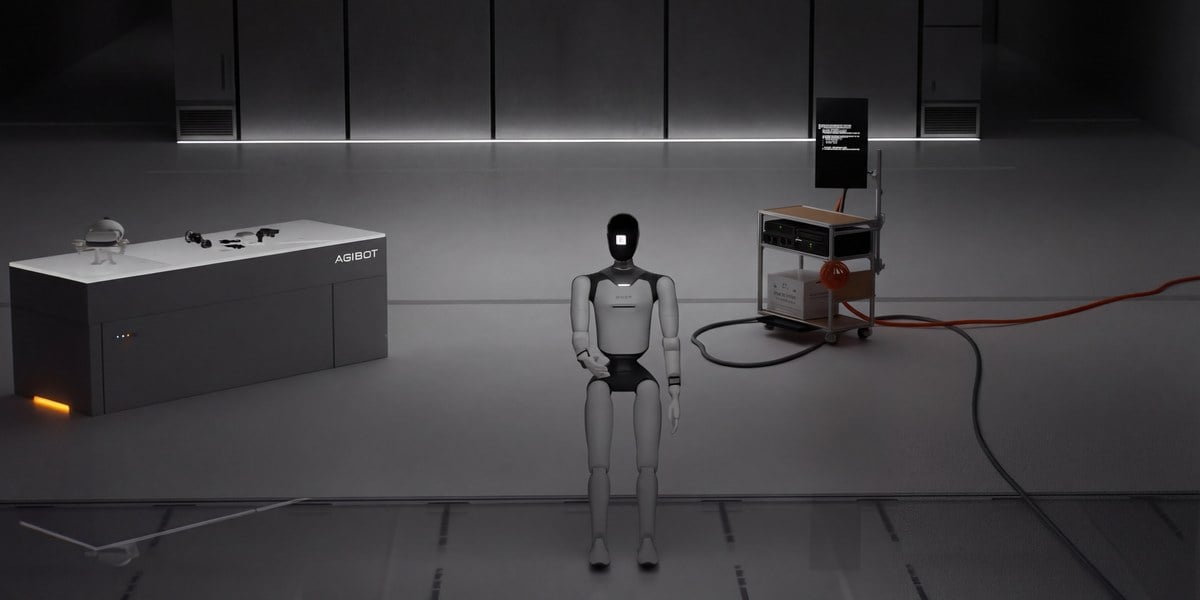
AGIBOT A3 Ultra Developer features an anthropomorphic design with articulated arms, legs, torso, and head. The mechanical configuration provides 51 active degrees of freedom, distributed as follows:
- Neck: 2 degrees of freedom.
- Each arm: 7 degrees of freedom.
- Pelvis / Torso: 3 degrees of freedom.
- Each leg: 6 degrees of freedom.
- OmniHand hands: 10 degrees of freedom in the standard configuration, expandable up to 20.
This design allows the robot to coordinate arm and leg movements, rotate its torso, adjust head position, and manipulate objects. In standard mode, walking speed reaches up to 1.8 m/s, whilst during routine daily operations it does not exceed 1.2 m/s.
Computer Vision and Sensor Suite
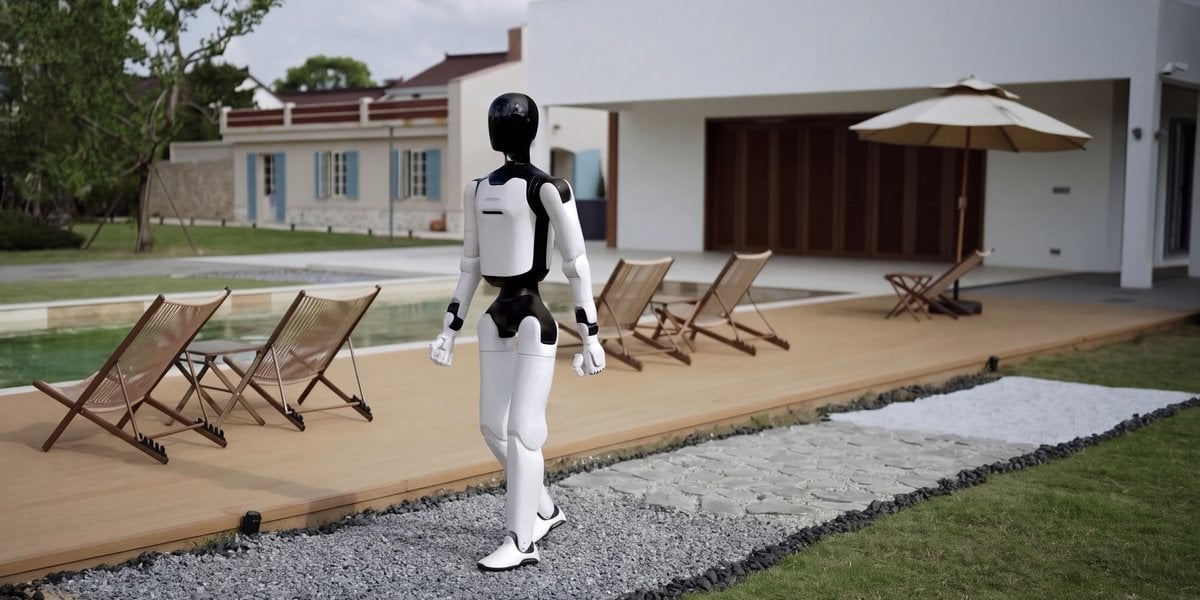
For spatial navigation and interaction with surrounding objects, the AgiBot A3 Ultra-Developer is equipped with a comprehensive array of optical and measurement sensors:
- Binocular RGB camera: generates stereo imagery for visual interaction and object recognition.
- Three wide-angle fisheye cameras: provide surround awareness around the robot and assist in detecting obstacles.
- 3D LiDAR: measures distances to objects and is used to build an environmental map.
- Chest-mounted RGB-D camera: captures visual information and workspace depth data for executing manipulations.
- Pelvis-mounted RGB-D camera: analyses the surface underfoot and detects obstacles in the path of travel.
- Shoulder touch sensors: register physical contact with the robot.
Information from the cameras and LiDAR is transmitted to the computing system, where it is used for environmental analysis, object identification, and motion planning. Thanks to this sensor configuration, the robot obtains the data necessary for orientation during movement and physical operations.
Computing Architecture and Software Platform
The computing system of the AGIBOT A3 Ultra Developer is built on a three-tier heterogeneous architecture. Its base layer consists of dual RK3588 computing boards, whilst an NVIDIA Thor module is included for more complex workloads. Total platform computing performance reaches 700 TOPS. Computing resources are used to analyse information received from cameras and sensors, recognise objects, calculate routes, and control the robot's movements.
Developer Edition Software Capabilities
- SDK and developer documentation. Essential tools and technical materials are provided for working with the robot's software interfaces and developing custom features.
- ROS 2 interfaces. Support is provided for connecting the robotic platform to software components and tools within the ROS 2 ecosystem.
- Configuring movements and actions. Secondary development tools allow creating custom motion sequences and adapting the robot's actions to specific project tasks.
- Individual behaviour customisation. Capabilities are included to alter how the robot interacts with people and adapt its behaviour to defined usage scenarios.
- Integration with third-party systems. Software interfaces enable connecting external solutions and creating collaborative workflows with other systems.
Power System and Chassis
The structural foundation is formed by a hybrid frame manufactured from magnesium alloy and carbon-fibre-reinforced nylon. Power is supplied by a 1,152 Wh battery. The design supports direct plug-in charging, automatic connection to a charging station, and battery swapping. A full charge takes up to 2 hours, whilst installing a fresh battery takes approximately 10 seconds. This approach reduces downtime between operating cycles.
Functional Capabilities and Operating Modes
The AgiBot A3 Ultra-Developer brings together autonomous navigation, computer vision, object manipulation, and software tools for building custom scenarios. As a result, the robot can be deployed for diverse tasks and for testing developed algorithms directly on a physical platform:
- Autonomous navigation. For indoor and outdoor orientation, the robot uses 3D LiDAR, cameras, UWB, and GPS RTK. These systems help determine current location, plot routes, and detect obstacles.
- Acquiring new skills. Few-Shot Self-Learning technology enables mastering new actions from a limited number of examples, applicable to training object operations and sequential tasks.
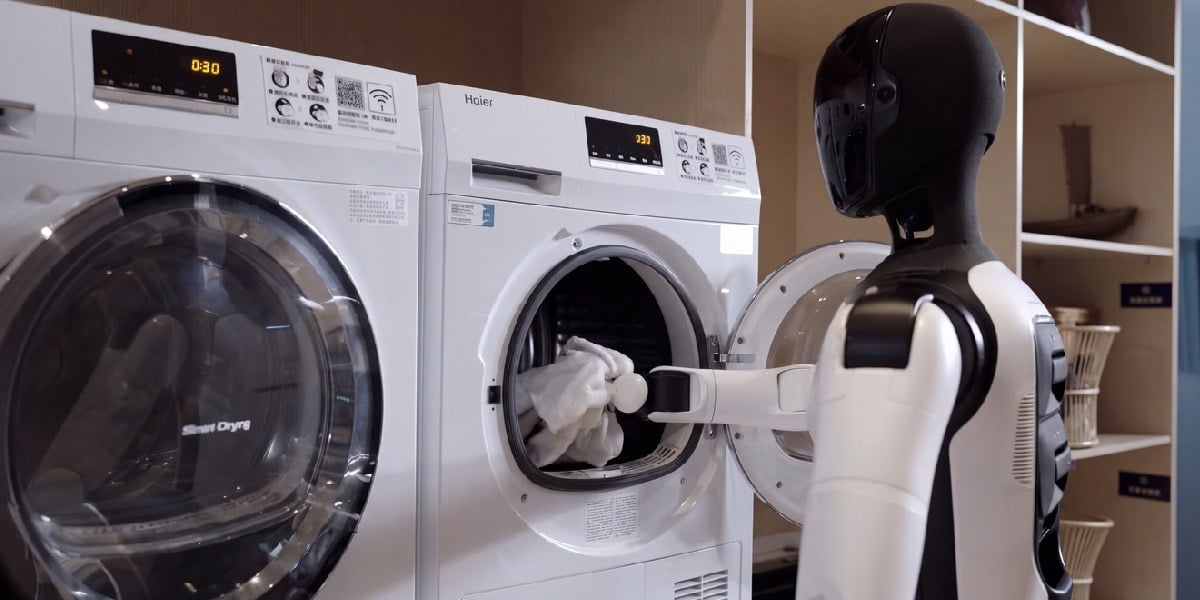
- Object manipulation. Robotic arms fitted with OmniHand grippers are designed to grasp, hold, and relocate items of varying shapes, with tactile sensors monitoring surface contact.
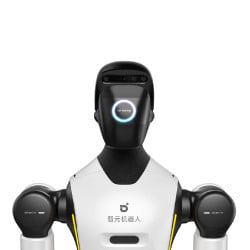
- Voice and multimodal interaction. Microphones, speakers, and a curved screen mounted on the robot's head enable communication with people for greeting visitors, conducting tours, providing consultations, and presenting products.
- Programming custom actions. The SDK and ROS 2 interfaces provide the ability to develop individual control algorithms, programme movements, and build operational sequences.
- Individual behaviour customisation. Secondary development tools allow modifying interaction scripts, tuning the robot's character, and adapting its behaviour to specific environmental conditions.
- Integration with other systems. Support for software interaction with third-party solutions allows incorporating the robot into comprehensive automation systems and research platforms.
Available features can be used to perform standard physical operations as well as validate proprietary algorithms. The robot's actual behaviour is determined by software configurations, training outcomes, and created scenarios.
Applications of the AgiBot A3 Ultra-Developer
The AgiBot A3 Ultra-Developer humanoid robot is designed for scientific research, robotics development, and automating physical operations across commercial, domestic, and industrial projects:
- Scientific research and robotics. Developing and testing algorithms for autonomous navigation, computer vision, motion coordination, and human-robot interaction.
- Software development. Creating bespoke control algorithms, programming movements, connecting third-party systems, and testing developed solutions on a physical robotic platform.
- Retail and commercial stores. Advising customers, demonstrating products, stocking shelves, unpacking, and sorting parcels.
- Hospitality and catering venues. Serving beverages, heating food, collecting waste, clearing tables, and placing items.
- Hotels and tourist attractions. Greeting guests, checking tickets, escorting visitors, taking photographs, and providing information.
- Offices and administrative buildings. Delivering documents, tidying desks, interacting with office equipment, opening windows, and assisting visitors.
- Industrial enterprises. Sorting parts and parcels, packaging goods, palletising loads, pressing buttons, and handling cable connections.
- Warehouse logistics. Moving goods, unpacking shipments, sorting parcels, and carrying out loading and unloading tasks.
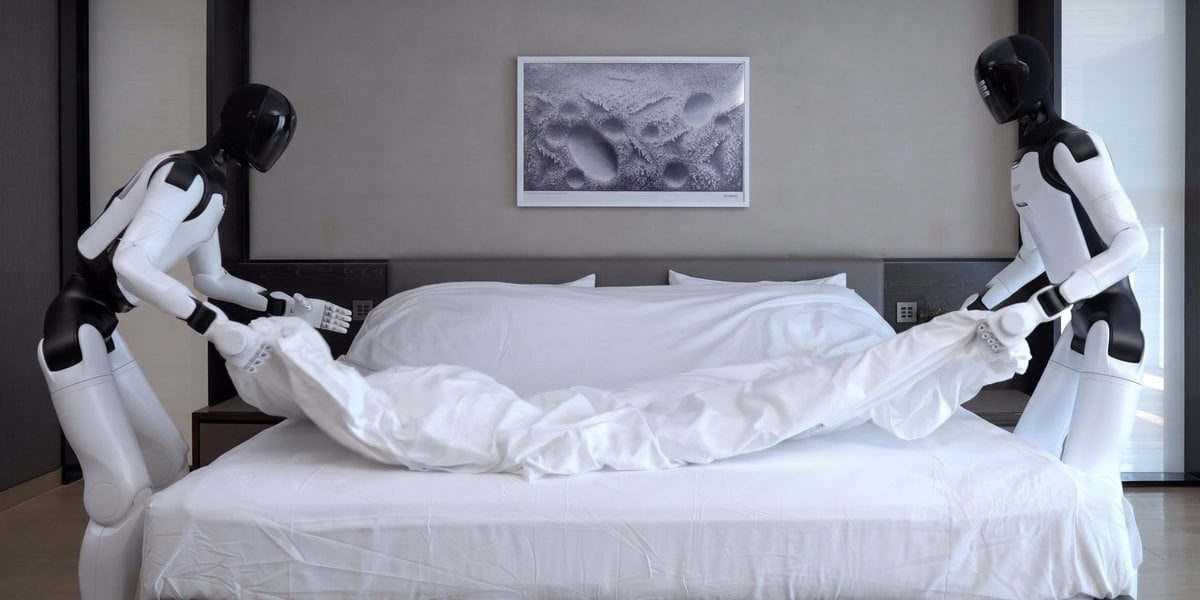
- Domestic tasks. Sorting belongings, organising books, setting tables, ironing clothes, opening doors, and interacting with household appliances.
What's in the Box: AgiBot A3 Ultra-Developer
The package includes the humanoid robot, charging equipment, remote control devices, and transport accessories. The core components are intended to prepare the unit for operation and ensure safe relocation:
- Humanoid Robot AGIBOT A3 Ultra-Developer. The main robotic device designed to execute programmed algorithms and movements, as well as interact with the surrounding environment.
- Battery Packs — 2 pcs. Swappable power sources for autonomous operation. The ability to quickly swap batteries minimises downtime during operation.
- Charger. A power supply unit designed for charging the battery packs from mains electricity.
- Magnetic Charging Connector. A magnetically latching connector that ensures quick and convenient charger attachment whilst helping prevent contact damage.
- Remote Controller. A controller for manually guiding the robot's movement, executing basic commands, and triggering an emergency stop.
- Lavalier Microphone. A wired or wireless device for transmitting operator voice commands with high clarity, particularly in noisy indoor environments.
- Quick Start Guide. A manual containing essential information on preparing the robot for initial startup, safety rules, and initial setup.
- Certificate of Qualification. A manufacturer document confirming the unit has passed factory quality inspection and complies with technical standards.
- Safety Straps — 2 pcs. Fastening elements for securing the robot to an overhead gantry or safety rig when testing new movements to prevent falls.
- Lifting Rings — 2 pcs. Mounting eyebolts installed into the robot's chassis and used for safe lifting, moving, or suspension.
Technical Specifications of the AgiBot A3 Ultra-Developer
General Specifications
| Parameter | Value |
| Active degrees of freedom | 51 |
| Neck degrees of freedom | 2 |
| Degrees of freedom per arm | 7 |
| Torso degrees of freedom | 3 |
| Degrees of freedom per leg | 6 |
| Hand degrees of freedom | 10 standard, up to 20 optional |
| Payload per arm, kg | up to 5 |
Sensor Suite and Computing Capabilities
| Parameter | Value |
| Vision system | 360° |
| Binocular camera | Wide-angle RGB |
| Panoramic cameras | 3 wide-angle fisheye RGB cameras |
| 3D LiDAR | Yes |
| RGB-D camera for manipulation | Yes |
| RGB-D camera for surface analysis | Yes |
| Shoulder touch sensors | Yes |
| Positioning system | UWB, GPS RTK |
| Positioning accuracy | Less than ±1 cm |
| Base computing boards | 2 × RK3588 |
| Additional computing module | NVIDIA Thor |
| Computing performance | Up to 700 TOPS |
| Connectivity | Wi-Fi, 4G/5G, Bluetooth |
| Network capabilities | Dual eSIM and physical SIM card |
Power and Operating Parameters
| Parameter | Value |
| Battery capacity | 1,152 Wh |
| Battery runtime | Up to 8 hours |
| Walking-to-standing ratio | 1:1 |
| Full charging time | Up to 2 hours |
| Charging methods | Direct plug-in, automatic docking, battery swap |
| Battery swap time | Approximately 10 seconds |
| Max walking speed (normal conditions) | Up to 1.8 m/s |
| Typical walking speed | Less than 1.2 m/s |
| Max laboratory walking speed | 2.5 m/s |
| Max running speed | 5 m/s |
| Operating temperature | -10 °C to +45 °C |
| Frame material | Magnesium alloy and carbon-fibre-reinforced nylon |
Developer Edition Software Capabilities
| Parameter | Value |
| SDK for secondary development | Supported |
| ROS 2 interfaces | Supported |
| Developer documentation | Available |
| Custom action configuration | Supported |
| Character and behaviour customisation | Supported |
| Third-party system integration | Supported |
Order the AgiBot A3 Ultra-Developer
Choose the AgiBot A3 Ultra-Developer for conducting robotics research, developing proprietary control algorithms, and automating physical operations in enterprises. Our specialists will help you review the technical specifications, package contents, secondary development tools, and delivery terms.