


- Stock: In Stock
- Model: 1.75 mm / 2.85 mm
- Weight Brutto: 14.00kg

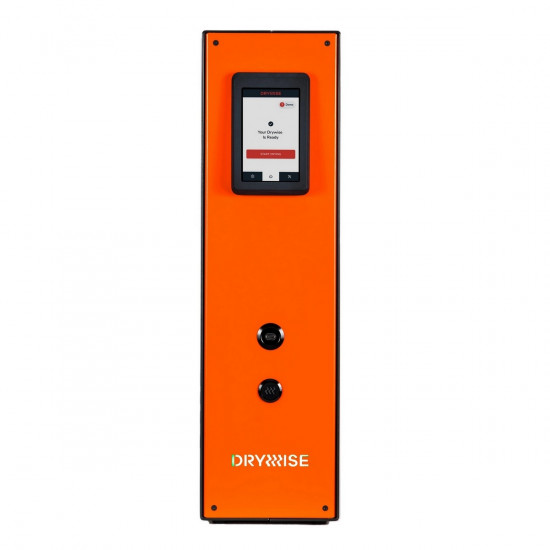
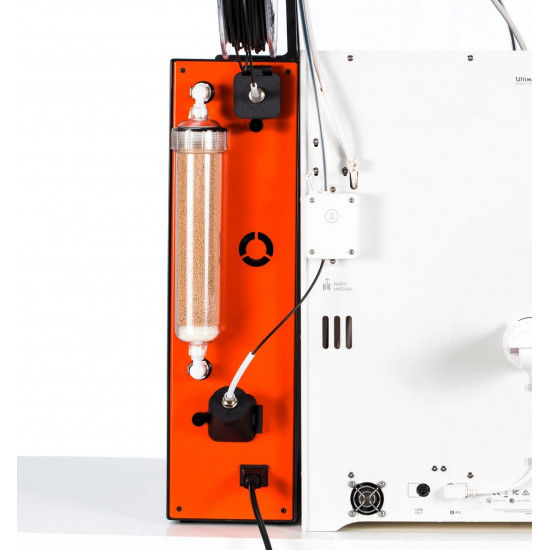
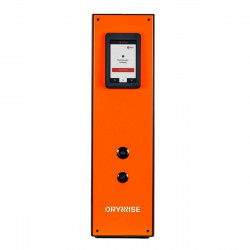
Drywise in-line filament dryer
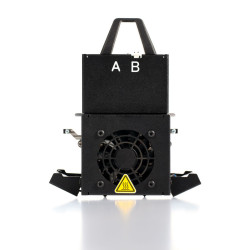
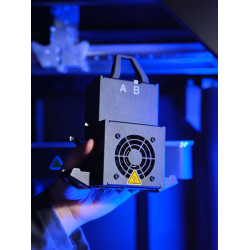
The Drywise in-line filament dryer is an in-line dryer designed for professional use in additive manufacturing.
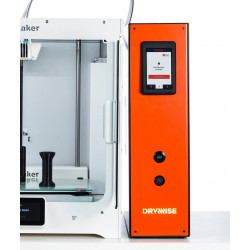
It has pre-programmed settings and ensures fast and efficient in-line drying by being connected directly to the 3D printer.
- The Drywise filament dryer is available in 1.75 and 2.85 mm versions.
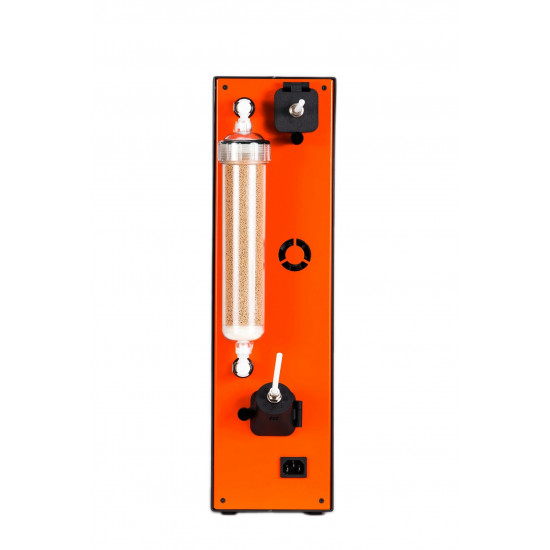
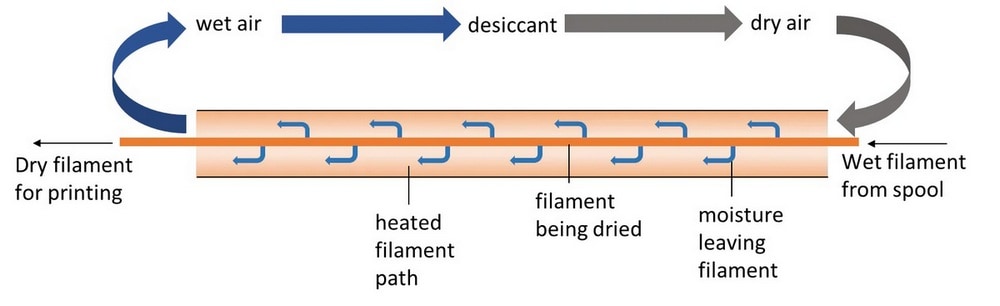
Hot and dry air circulates inside the Drywise, causing the material section in the chamber to release accumulated moisture. The desiccant cartridge then traps the water molecules, re-drying the air. It is analogous to a built-in water heater that instantly heats a small volume of water inside, unlike a full tank that takes longer to heat up.
Key features of Drywise
- Speed. The dryer's special feature is that it dries only a section of filament for 3D printing, reducing the amount of work required.
- Smart. Smart sensors help to dry the filament to the best conditions for 3D printing, avoiding damage to the filament. The internal design also avoids multiple heating cycles.
- User-friendly. A user-friendly user interface guides the user all the way. Replaceable and rechargeable desiccant cartridges help reduce downtime.
- Safe. Smart sensors detect the movement and condition of the filament and adapt internal settings accordingly.
- Upgradeable. The list of certified filaments with calibrated parameters is constantly updated.
- Versatile. Thanks to its built-in architecture, Drywise can be used with coils of any format or size.
High-quality materials are the key to successful 3D printing
Most 3D plastics are hygroscopic and absorb water from the atmosphere. The moisture content of the material greatly affects the print result, so it needs to be dried to perform at its best. In injection molding, it is common practice to dry the material before use, and most 3D printing filaments are made up of the same basic materials.
Over 50% of new filaments need to be dried before printing. In some materials, even a small amount of moisture can damage the entire print. Drywise's research shows that even new filament, freshly opened from a sealed box, often needs to be dried for best performance.
Maximum quality control of materials
- Significant time savings. Valuable time is gained through quasi-instant drying, a feature of the integrated drying architecture. In addition, pre-calibrated parameters for certified materials eliminate guesswork and the need to investigate settings.
- Shorter time to separation. In-line drying, while printing, is much more economical and efficient, eliminating long drying times while drying an entire reel.
- Higher machine uptime. No pre-scheduling is required, meaning it's easier to get the most out of your 3D printers.
- Lower energy costs. Thanks to the high efficiency of the drying process. It also does not require auxiliary devices to keep the filament in good condition.
- Minimization of material waste. Excellent material quality control before and during printing is guaranteed.
- Simplified, reliable process. Drywise eliminates the uncertainties when it comes to material quality control by respecting the material while delivering the best possible workpieces.
The impact of moisture on 3D printing results
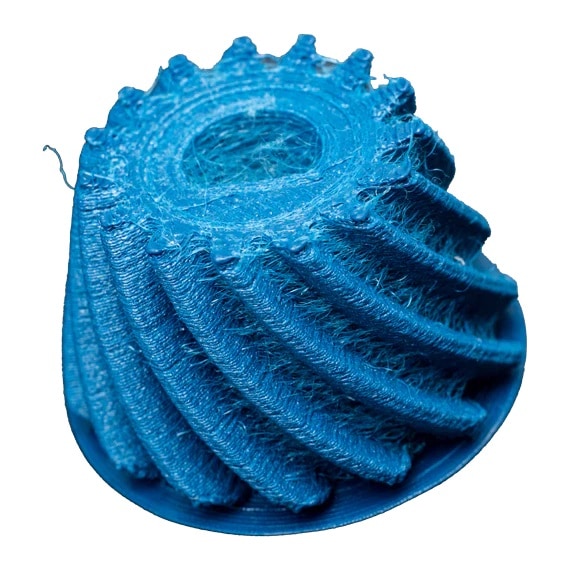
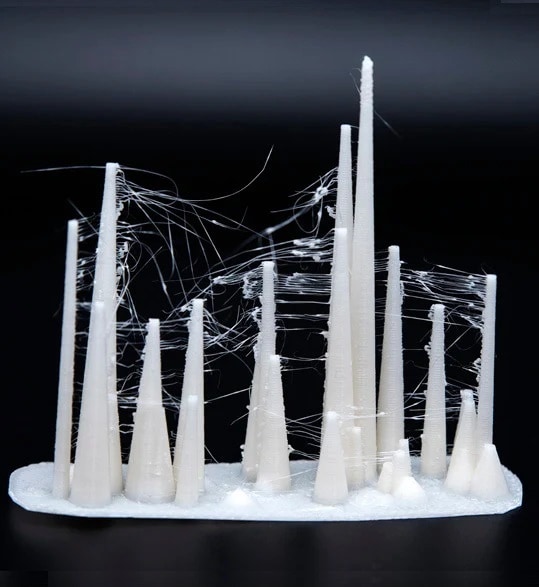
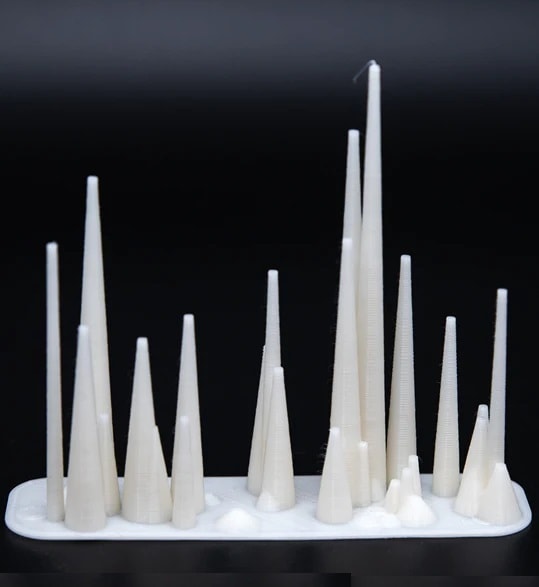
The effect of moisture absorbed by the material on the print quality is shown in the first image below:
- Surface unevenness
- Dimensional inaccuracies
- Poor mechanical properties
- Unstable material extrusion
Traditional drying of plastic filaments
Hidden costs of moisture damage:
- Wasted man-hours. Valuable time is lost in planning the drying of the material, researching the right drying parameters and handling the material.
- Machine downtime. It is very difficult to fully utilize the improvised equipment, as the yarn needs to be planned and dried several days in advance.
- Wasted material. Improper drying leads to inconsistent print results with poor mechanical properties and poor aesthetics, which end up being thrown away or failing prematurely.
- Variability. Even when standard operating procedures are followed, different results can be expected. There are many unknowns that affect the process, the initial moisture content in the filament, the relative humidity of the environment, the rate of moisture loss in the furnace, etc.
- Additional devices are required. After drying, other devices are needed to keep the filament in good condition.
- Material degradation. Several heating cycles that are necessary during the coiling process, if not consumed immediately, eventually degrade the quality of the material.








-250x250w.jpg "3D printer UltiMaker S8 Pro Bundle")